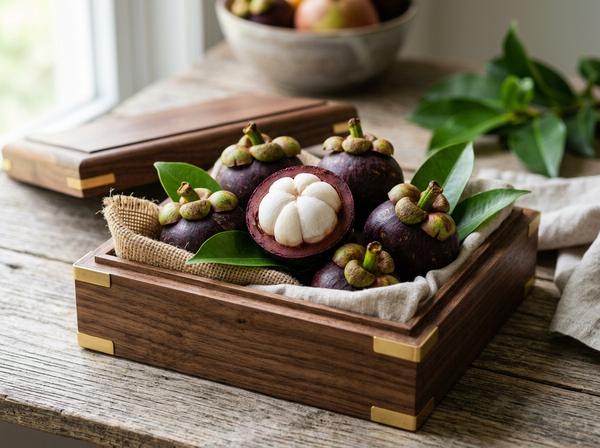
As international travel increases and nutritional science advances, Indian households are looking beyond apples and bananas. Exotic fruits like Thai Rambutan, Mangosteen (the "Queen of Fruits"), and Hass Avocados are entering daily diets due to their exceptional antioxidant profiles, healthy monounsaturated fats, and unique taste experiences.
However, exotics can be intimidating if you have never handled them. How do you tell if an avocado is ripe? How do you crack open a mangosteen without crushing the delicate white segments inside? In this guide, our culinary and nutrition desk profiles these three exotics, outlining their health benefits, prep methods, and storage rules.
1. Mangosteen: The "Queen of Fruits"
Highly prized for its sweet, tangy, and juicy white pulp segments encased in a thick, purple rind, Mangosteen is native to Southeast Asia.
- Health Benefits: Exceptionally rich in Xanthones—a unique class of active polyphenolic compounds with powerful antioxidant, anti-inflammatory, and anti-aging properties. High in Vitamin C and folate.
- How to Prep & Eat: Use a sharp knife to make a shallow circular cut around the middle of the purple rind (do not cut too deep into the white flesh). Gently twist the rind to pull it apart, exposing the white garlic-like fruit segments inside. Eat them raw (spit out any seeds).
- Storage Guide: Store in the refrigerator for up to 5 days. Keep in a ventilated bag; do not freeze.
2. Thai Rambutan: The "Hairy Ruby"
Rambutan gets its name from the Malay word "rambut" (meaning hair), referring to the soft, red, hair-like spikes on its outer skin. Inside lies a translucent, sweet, and juicy white grape-like pulp.
- Health Benefits: Loaded with natural copper, manganese, iron, and vitamin C. Rambutan boosts white blood cell production, aids bone density, and supports healthy collagen production.
- How to Prep & Eat: Slice the outer rind around the center with a knife, or pinch the skin until it tears. Peel the skin away to reveal the fruit. Bite the sweet pulp off the central woody seed.
- Storage Guide: Highly sensitive to drying out. Store in a perforated plastic bag in the refrigerator for up to 7 days.
3. Hass Avocados: The "Healthy Fat Superfood"
Unlike other fruits which are primarily carbohydrates, Hass Avocados are composed of healthy monounsaturated fats, specifically oleic acid.
- Health Benefits: Monounsaturated fats help reduce LDL (bad) cholesterol and support heart health. Rich in lutein (good for eyes), potassium, and vitamins K, E, and B6.
- How to Prep & Eat: Slice vertically around the seed. Twist the halves in opposite directions to separate. Tap the seed with a knife to remove. Scoop the green buttery flesh out with a spoon.
- Storage Guide: Store firm, unripe avocados at room temperature in a paper bag. Once they feel slightly soft to a gentle squeeze, they are ripe. Transfer ripe avocados to the refrigerator immediately to stop further ripening.
| Fruit | Flavor Profile | Key Nutrient | Ripeness Check |
|---|---|---|---|
| Mangosteen | Tangy-sweet, melt-in-the-mouth, juicy | Xanthones (Antioxidants) | Rind yields slightly to thumb pressure. Dark purple color. |
| Rambutan | Sweet, floral, translucent pulp | Vitamin C, Copper | Outer skin is bright red with green-tipped hair. |
| Hass Avocado | Rich, buttery, nutty, savory | Oleic Acid (Healthy Fats) | Skin is dark green/black and yields to gentle pressure. |